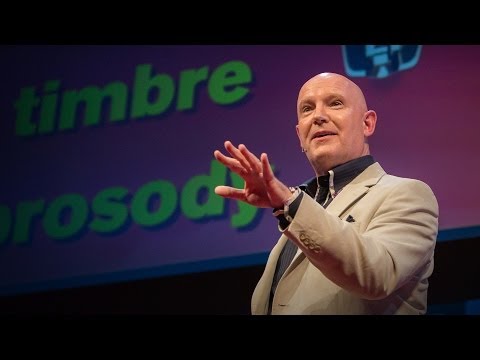
ちょうど背伸びできる難易度のコンテンツです。理想的な学習素材!
スクリプト抜粋
6 語ハイライト済みThe human voice is the most powerful sound in the world. It's the only one that can start a war, or say "I love you." And yet, most people have no idea how their voice sounds to others — or how to use it well. So how can we make it work for us, instead of against us?
If you want to be heard, you have to speak up — not louder, but with intention. That's the first lesson. Speaking up isn't about volume. It's about clarity, about purpose, about making sure your words have weight behind them. Too many people mumble through the most important sentences of their lives.
Let's start with the physical. Pay attention to how you breathe — it changes everything. If you breathe high in your chest, your voice sounds thin and anxious. If you breathe low, from the diaphragm, your voice sounds grounded and confident. Try it right now. Put your hand on your belly. Take a breath. Feel where it goes.
Now let's talk about meaning. The hardest part of speaking is getting your real meaning across. You know what you want to say. But the version that comes out of your mouth might be something completely different. People interrupt, or hear only the last three words, or get distracted by your tone. So how you come across depends on tone, pace, and presence — not just words.
Here are four powerful tools. Register: speak from lower in your chest, not up in your throat. Timbre: the texture of your voice, which can be warm and rich, or thin and nasal. Prosody: the rhythm and melody. Monotone voices bore people. Pace: slow down for emphasis. Silence is not a bug. Silence is a feature.
When you make a point, pause. Let it land. Let the listener catch up with you. Your voice can stand out if you train these habits. It takes practice — daily practice — but the results are remarkable. Speaking well isn't about talent. It's about awareness and practice. And anyone can get better at it, starting today.
speak up
If you want to be heard, you have to speak up — not louder, but with intention.
意味
はっきり声を出す、意見を述べる
ニュアンス解説
物理的に声を大きくする意味と、意見を率直に述べる比喩的意味の両方。フォーマル/カジュアル両用。
例文
Please speak up if you disagree.
come across
How you come across depends on tone, pace, and presence — not just words.
意味
〜のように受け取られる、伝わる
ニュアンス解説
話し方・ふるまいから受ける印象を指す。意図と違って伝わるときの反省ニュアンスも含む。
例文
I didn't mean to come across as rude.
pay attention to
Pay attention to how you breathe — it changes everything.
意味
〜に注意を払う
ニュアンス解説
意識的に集中して注意を向ける定型。give attention より能動的。to の後に対象を置く。
例文
Pay attention to the small details.
get across
The hardest part of speaking is getting your real meaning across.
意味
〜を伝える、理解させる
ニュアンス解説
相手に意味・感情を「届ける」成功を表す。communicate より能動的で、「相手まで渡る」イメージ。
例文
I couldn't get my point across in the meeting.
make a point
When you make a point, pause. Let it land.
意味
主張する、要点を伝える
ニュアンス解説
議論や会話で「ここが言いたいこと」を強調する定型。make a good/valid point で「良い指摘」とも。
例文
You made a great point at the meeting.
stand out
Your voice can stand out if you train these habits.
意味
際立つ、目立つ
ニュアンス解説
良い意味で他より優れて見える、という含み。場面・人・作品どれにも使える汎用表現。
例文
His presentation really stood out.
このフレーズ、3日後も言えますか?
無料アカウントを作ると、保存した表現をクイズ形式で復習できます。忘却曲線に沿って「使える英語」に変わります。
クレジットカード不要 · 30秒で登録完了
Examples
他のコンテンツを見る
 Speech
Emma Watson · HeForShe UN Speech
国連 · 2014
 上級チャレンジSpeech
Steve Jobs · Stanford Commencement
Stanford · 2005
 TED
TEDSimon Sinek · How Great Leaders Inspire
TED · 2010
 TED
TEDMatt Cutts · Try Something New for 30 Days
TED · 2011
 Speech
Malala Yousafzai · UN Speech
国連 · 2013
 TED
TEDKelly McGonigal · How to Make Stress Your Friend
TED · 2013
 TED
TEDShawn Achor · The Happy Secret to Better Work
TED · 2011
 TED
TEDKen Robinson · Do Schools Kill Creativity?
TED · 2006
 TED
TEDBrené Brown · The Power of Vulnerability
TED · 2010
 TED
TEDAmy Cuddy · Your Body Language May Shape Who You Are
TED · 2012
 TED
TEDElizabeth Gilbert · Your Elusive Creative Genius
TED · 2009
 TED
TEDChimamanda Adichie · The Danger of a Single Story
TED · 2009
 Speech
J.K. Rowling · Harvard Commencement Speech
Harvard · 2008
 Speech
Michelle Obama · DNC Keynote Speech
DNC · 2016
 Speech
Randy Pausch · The Last Lecture
Carnegie Mellon · 2007
 上級チャレンジSpeech
Barack Obama · Farewell Address
Chicago · 2017
 上級チャレンジSpeech
Elon Musk · USC Commencement Speech
USC · 2014
 上級チャレンジSpeech
Oprah Winfrey · Stanford Commencement Speech
Stanford · 2008
 上級チャレンジSpeech
David Foster Wallace · This is Water
Kenyon · 2005
 上級チャレンジSpeech
Carl Sagan · Pale Blue Dot
NASA · 1990
 Vlog
VlogEmma Chamberlain · i got rid of (almost) everything
Vlog · Emma Chamberlain
 Podcast
MKBHD · iPhone 15 Pro Review
Tech · Marques Brownlee
 Podcast
Jenna Ortega · Hot Ones
Interview · First We Feast
 Podcast
Sydney Sweeney · Hot Ones
Interview · First We Feast
 TED
TEDCarol Dweck · The Power of Believing You Can Improve
TED · 2014
 TED
TEDTim Urban · Master Procrastinator
TED · 2016
 TED
TEDDan Gilbert · The Surprising Science of Happiness
TED · 2004
 News
NewsVox · 2023, in 7 Minutes
News · Vox